The Illusion Of AI Productivity
Are we actually getting more productive with AI? Hidden costs of AI and why I don't want to optimize away the slowest and most challenging work I do.
There's so much talk about AI and productivity these days. Everything is about efficiency, speed and getting more done. It seems like we are all racing to optimize and maximize everything — from how we write to how we think to how we make decisions.
So are we actually getting more productive? For some tasks we do, but at the same time we lose productive time, too. So if we do become more productive, at what cost, and with what goal in mind?

Not always true, but definitely frequent: the illusion of AI productivity.
1. We Don't Need Faster. We Need Better. #
As a result, we optimize away every task, every argument, every process — just so we can produce and ship more, faster. As if the whole point of work is to produce more, rather than produce better.

The illusion of AI productivity — we start faster, but rarely finish faster.
A recent AI productivity study researched 163,000 employees over 3 years. The results:
- Time spent on email: up 104% compared to pre-AI
- Time spent on chat/messaging: up 145%
- Time spent in biz management tools: up 95%
- Time spent working on Saturdays: up 46%
- Time spent working on Sundays: up 58%
- Time spent in focus mode: down 9%
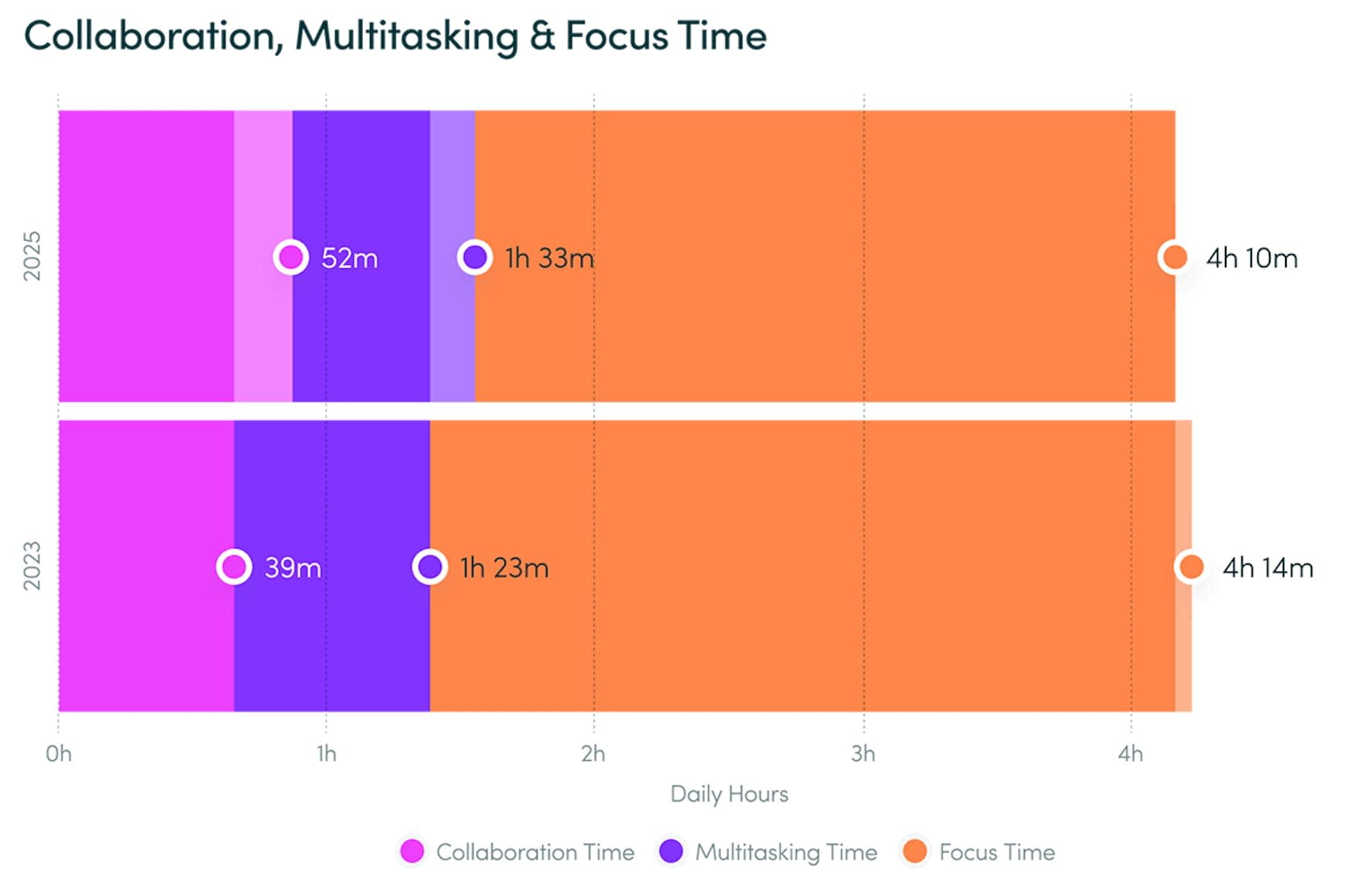
Daily time allocation for collaboration, multitasking, and focus: 2023 vs. 2025. Source: ActivTrak.
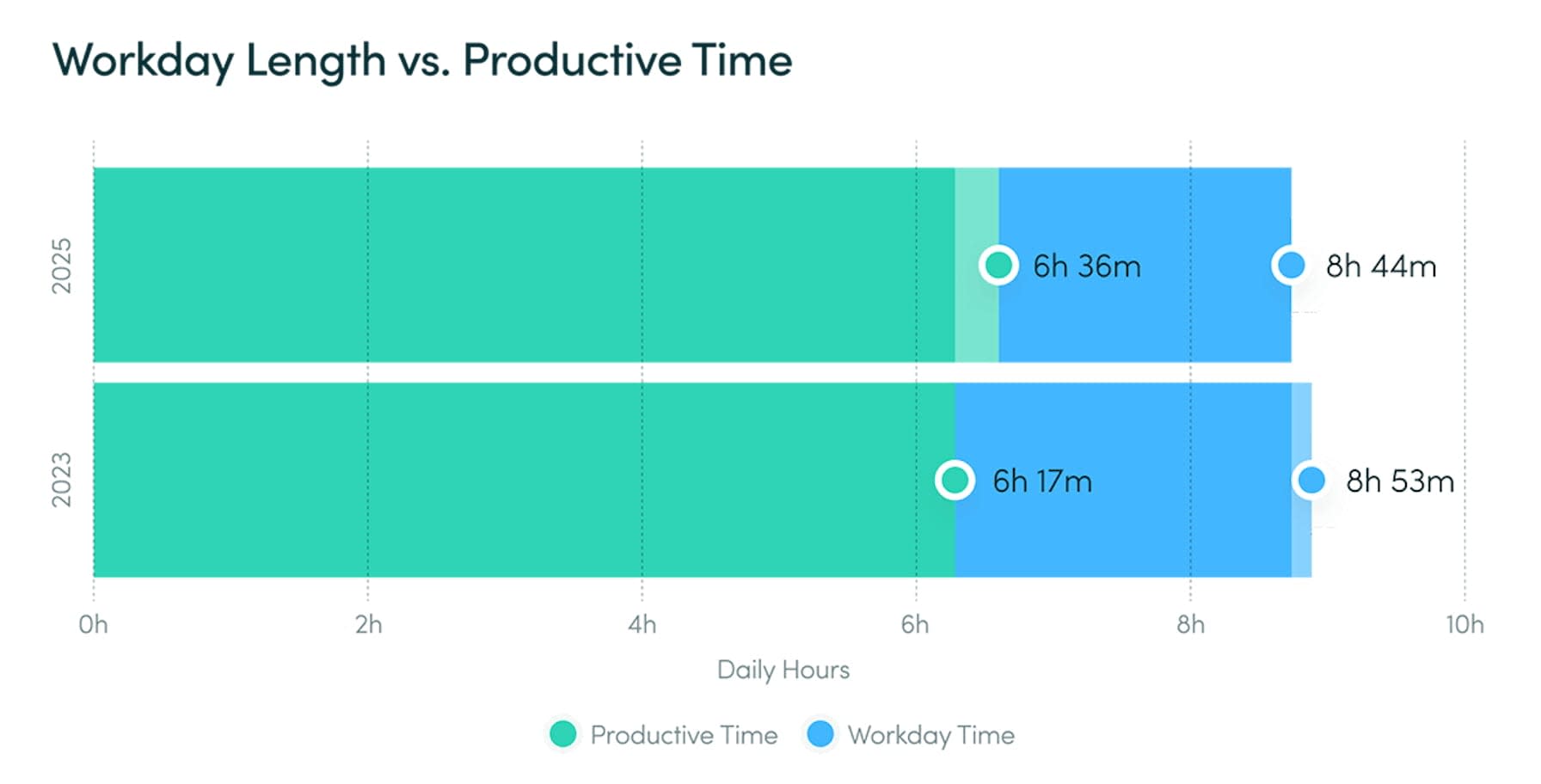
Workday length vs. productive time: 2023 vs. 2025. Source: ActivTrak.
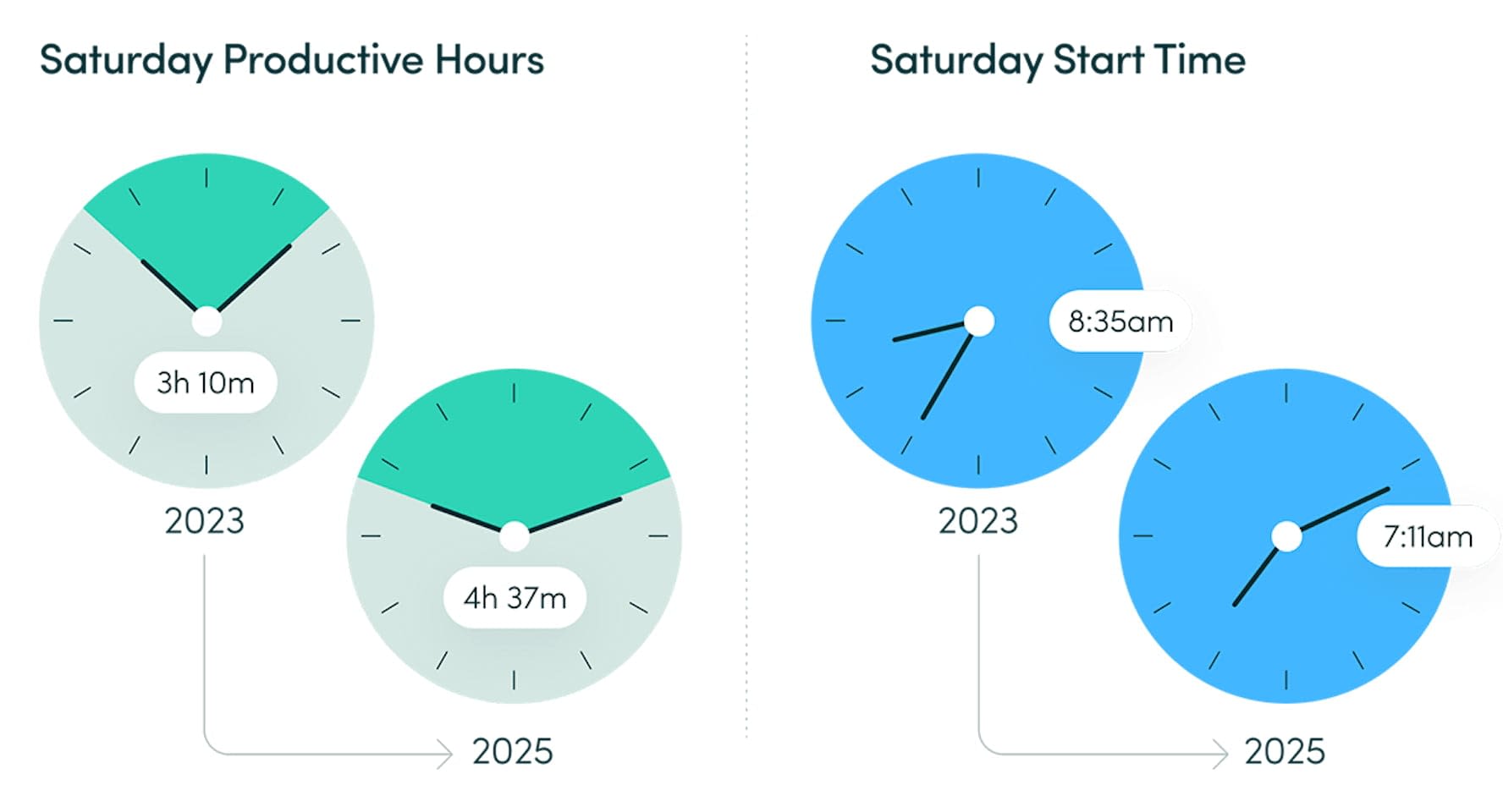
Saturday work patterns: 2023 vs. 2025. Source: ActivTrak.
In other words, everybody seems to be so busy being busy, using plenty of AI tools to supposedly make us less busy. All of it while producing vast amounts of output that most people don't need, didn't ask for and can't manage — but have to deal with anyway, with AI tools they feel like they need to use.
And most of it is token-costly, extremely verbose and thoroughly useless.
2. Where Is The Joy In All of This? #
Most people I know are incredibly stressed, frustrated, anxious and genuinely uncertain about the future. I understand the pressure. I understand not wanting to be left behind. Yet most companies don't need more decisions — they need better decisions. So why do we end up racing for velocity when what's broken is the direction?

The cost of changes in enterprise. Critical thinking is more important than ever as the cost of being wrong has increased. By Philip Illum Thonbo.
Personally, I love working through hard problems from scratch. I genuinely enjoy working with interesting people — seeing how they think and how they work. I truly enjoy the painfully slow process of doodling with pencil and paper, thinking things through together, sketching, planning, figuring it out.
I love creating presentations by writing a damn good story first. Often it takes weeks or months before a single slide emerges. That's a truly painful yet incredibly joyful and rewarding experience — and it prompts me to think, pause and think again. It also gives me a genuine sense of accomplishment. Asking AI to generate it for me doesn't come anywhere close!
So why would I want to optimize away the very things I truly enjoy?
3. Optimize The Boring Bits With AI #
I'm not against AI — I use AI tools daily where they make sense. But I refuse to automate away everything in my life just because I can. I want to optimize away the boring bits. The repetitive copy-pasting. The auto-filling. The scheduling. The things I'd love to avoid and never do again.

Perceived quality of AI assistance vs. user expertise. Large view.
I want AI to help me plan and organize — but not to think or execute for me. I want it to quietly remind me of things I overlooked, like a critical email I should reply to. I want it to gently remind me of my goals and support me in getting there.
But I don't want to learn how to use AI to do more faster.
I want to use AI to protect the things worth doing slowly.
Wrapping Up #
Fortunately, life is so rich in wonderful, joyful experiences that are worth exploring and pursuing. I would never want to automate them away. And whenever possible, I would go above and beyond to be highly inefficient when I work on something that is remarkably exciting and truly joyful.
What's left if we automate it away?
Sources and Resources #
- 2026 State of the Workplace: Productivity and Efficiency Report, by ActivTrak
- AI Doesn't Reduce Work — It Intensifies It, by Harvard Business Review
- When Using AI Leads to Brain Fry, by Harvard Business Review
- AI-Generated Workslop Is Destroying Productivity, by Harvard Business Review
- Poll: Majority of voters say risks of AI outweigh benefits, by NBC News